
Layered texture interior design is one of the simplest ways to make a room feel warmer, more inviting and more complete. Unlike colour-led decorating, which starts with a palette, texture-led styling focuses on how a space feels as much as how it looks. Smooth, nubby, woven, brushed and natural surfaces can create depth even when the colours remain quiet.
By combining materials such as linen, boucle, rattan, wool, timber and ceramic, you can add visual interest without overcrowding the space. The aim is not to fill every surface, but to build contrast thoughtfully.
What layered texture means in interior design
Layering texture means placing materials with different visual and tactile qualities next to one another. A soft linen curtain beside a smooth painted wall, a boucle chair on a flat-weave rug, or a rattan basket under a polished console all create contrast. Each material becomes more noticeable because it is supported by something different.
A room may already contain timber flooring, painted walls and upholstered furniture; adding one or two woven, ribbed or handmade elements can make the whole scheme feel more considered.
Balance softness with structure
Successful rooms usually include both soft and structured textures. Cushions, throws and rugs bring comfort, while timber, metal, glass and stone provide definition. Too many soft finishes can make a room feel shapeless, while too many hard surfaces can make it feel cold.
Use repetition to create cohesion
Texture should feel connected rather than random. Repeating one material in two or three places helps the room settle. For example, a rattan lampshade can relate to a woven tray and storage basket without making the scheme look themed.
Layering texture in the living room
The living room is an easy place to experiment because it already contains several large surfaces. Start with the floor and seating, then add smaller tactile details. A wool rug can anchor the room, while linen curtains soften the windows.
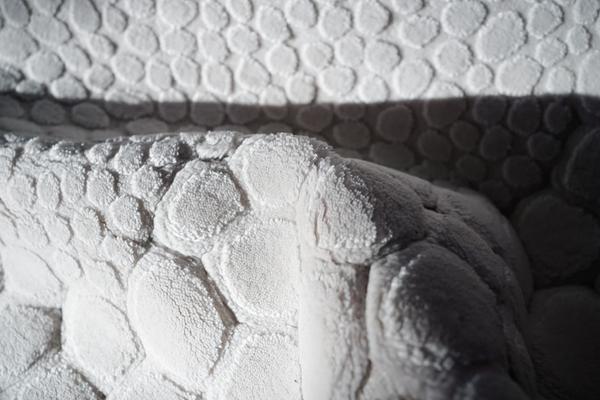
Boucle furniture works particularly well as a focal texture. A cream boucle armchair, curved footstool or occasional chair adds softness without relying on pattern. Because boucle has a distinctive looped surface, balance it with calmer materials such as a smooth leather sofa, simple timber table or tightly woven rug.
For a more relaxed look, explore rattan interior ideas through lighting, baskets or a small side table. Rattan brings warmth and natural rhythm, especially in neutral rooms.
Create depth on the sofa
Instead of using several cushions in the same fabric, combine two or three finishes within a limited colour range. A washed linen cushion, a velvet cushion and a knitted throw can create more depth than a collection of bold prints. Vary the scale too: one chunky weave, one fine weave and one smooth surface often feels balanced.
Layered texture interior design in the bedroom
Bedrooms benefit from softer layering because comfort is central to the room. Begin with breathable bedding, such as cotton or linen. A lightly crumpled linen duvet cover has an effortless quality that contrasts beautifully with a smooth painted headboard or simple timber bed frame.
Add a quilt, wool blanket or textured throw across the lower third of the bed. At the windows, full-length curtains can soften the room and help absorb sound.
Tactile home styling in a bedroom should still feel calm. Choose a few noticeable textures and repeat them gently. A rattan bedside table can connect with a woven pendant light, while a boucle bench can echo a small cushion. Avoid adding a different statement material to every item.
Adding texture to kitchens and dining spaces
Kitchens contain many hard, practical surfaces, so texture can make them feel more welcoming. Timber chopping boards, ribbed glass, handmade ceramics and woven stools introduce character without affecting functionality. Displaying a small group of useful objects is often enough.
In a dining area, contrast a smooth table with upholstered or woven chairs. If the room includes sleek cabinetry or polished stone, rattan pendant lights or cane-backed chairs can provide an effective counterpoint.
Let natural imperfections show
Handmade and natural materials often include slight variations in colour, grain or shape. These imperfections are part of their appeal.
Using texture in bathrooms and hallways
Bathrooms are another area where hard surfaces can take over. Fluffy towels, a timber stool, a waffle bath mat and ribbed storage containers can soften tiles and sanitaryware. Choose moisture-suitable materials and avoid placing natural fibres where they will remain damp.
Hallways need durable finishes, but they can still feel layered. A washable runner adds softness underfoot, while a woven basket provides practical storage.
How to avoid making a room feel cluttered
The difference between layered and cluttered styling is editing. Before adding anything new, look at the textures already present. Flooring, upholstery, curtains, cabinetry and wall finishes all count, so you may need fewer accessories than you think.
Keep colour controlled when combining several textures. Leave some smooth surfaces untouched so expressive materials have room to stand out.
Scale matters too. Combine broad textures, such as linen curtains or a large rug, with medium and small details. If every textured element is tiny, the room may look fussy. If every element is chunky, it can feel heavy.
Frequently asked questions
How many textures should you use in one room?
There is no fixed number, but three to five noticeable textures usually give enough variety without overwhelming the space. Count the major materials already present before adding accessories.
Can layered texture work in a small room?
Yes. Use texture through a few practical pieces, such as linen curtains, a woven rug and a ribbed lamp. Keeping the colour palette cohesive will help the room feel calm rather than crowded.
Is boucle furniture difficult to style?
Boucle furniture is easy to style when treated as a focal texture. Pair it with smoother materials, simple shapes and restrained colours so its looped surface remains distinctive.
Do you need neutral colours for tactile home styling?
No. Texture works with colour as well as neutrals. The important point is to avoid too many competing finishes and shades at once.
Build texture gradually
Layered texture interior design works best when it develops naturally. Start with the room’s largest surfaces, notice where it feels flat, and add contrast with purpose. Linen can soften, boucle can create comfort, rattan can bring warmth, and timber or ceramic can add structure.
By treating texture as a core styling principle rather than a final decorative extra, you can create rooms that feel richer, calmer and more personal. The result is not simply a space that photographs well, but one that feels comfortable and interesting to live in every day.