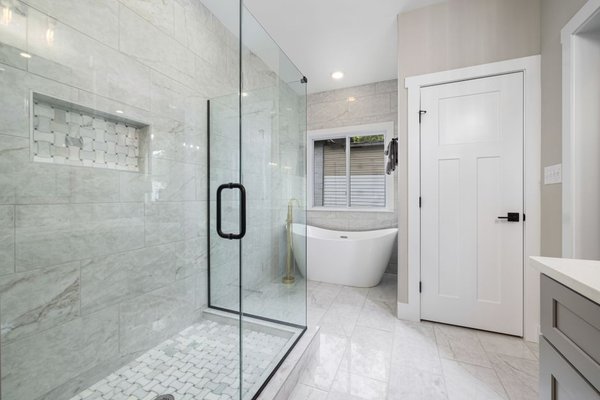

A family bathroom often needs to handle two very different routines: a quick shower before work and a proper bath for children or anyone who enjoys a soak. When separate fixtures will not fit, a bath shower combination can serve both needs without crowding the room. The key is to make it comfortable for daily showers, not simply add a shower head above an existing tub.
These shower over bath ideas concentrate on where water lands, how easily people can get in, where bottles go and how much cleaning the arrangement creates.
Plan the Shower Bath Layout Before Choosing Finishes
Start with a simple floor plan. Mark the bath, basin, toilet, door swing and location of the shower wall. A screen that looks elegant in a showroom might collide with a nearby basin at home. Check existing waste and pipework positions too, since moving them may increase renovation costs.
Pick the right shape of bath
A straight bath is often easiest to fit into a compact room. P-shaped and L-shaped shower baths offer more space at the shower end, but the wider portion needs additional clearance. Compare actual product dimensions, rather than assuming a curved or squared shape will fit your space.
Check where people will stand
Stand in the proposed shower area. Is the base comfortably flat? Are sloping sides underfoot, and does the shower head point into the centre of the standing space? A roomy-looking bath can still be awkward for showering if its bottom is narrow or the taps restrict movement.
Bath Screen Ideas That Keep the Floor Dry
A fixed glass panel for a clean look
Clear fixed glass can keep a small room feeling open and has no moving hinges to clean. Its weakness is limited coverage: a short panel may allow spray to escape. Select its dimensions according to the shower head’s location, not appearance alone.
A folding screen for family access
Folding screens can move aside when you bathe children or clean the tub. A hinged model offers similar flexibility if there is enough space for its swing. Check the full opening movement against the basin, toilet and door, and remember that seals and hinges need routine cleaning.
A curtain when flexibility matters most
A shower curtain costs less to replace and pulls completely aside at bath time. Choose a suitable rail and a curtain that hangs inside the tub during showers. Spread it out to dry afterwards to discourage persistent dampness.
Choose Shower Heads and Taps for Everyday Comfort
An adjustable-height shower rail helps adults and children use the same space. A handheld shower head also makes it easier to rinse hair, wash the bath and direct water away from the screen opening. Position the main spray so it falls well inside the bath, rather than towards the bathroom floor.
Controls should ideally be reachable before stepping beneath the water. Thermostatic mixing controls can help maintain a steadier temperature, but appropriate temperature settings and supervision still matter. Ask a qualified installer to check water pressure, hot-water compatibility and the suitability of existing fittings.
Tile the Shower Area as a Proper Wet Zone
Carry wall tiles above the bath and throughout the shower’s splash area for a unified look. Larger tiles create fewer visible grout lines; smaller ones work well around recesses and corners. Neither tile nor grout alone guarantees waterproofing, so specify a suitable waterproofing system beneath the surface, especially around corners and penetrations.
Matching the screen frame and tap finish can keep the room visually calm. If you are still choosing materials, bathroom tile ideas can help narrow down colour, pattern and grout combinations without overwhelming a compact space.
Make Over Bath Shower Storage Effortless
Bottles balanced along the bath rim are easy to knock into the water. If you are renovating the wall, plan a waterproofed recessed niche within comfortable reach. Otherwise, consider a securely mounted shelf or shower caddy designed for wet conditions. Keep any fittings clear of the screen’s folding or swinging path.
Children’s bath toys can live in a removable, draining basket rather than among adult toiletries. A useful rule is to keep only the products needed that day within the shower area. For the rest, small bathroom storage ideas can help reclaim cupboard and drawer space.
Think About Safety, Cleaning and Ventilation
Climbing over a bath side is not suitable for everyone. Provide a stable, slip-resistant surface, consider correctly fitted grab rails where needed and keep the floor clear. Never use a glass screen or towel rail for support. Where mobility is limited, a low-threshold shower may be a better long-term solution.
Inspect screen seals and joints regularly, wipe away standing water and use effective extraction to manage moisture. If a bathroom stays damp after showers, bathroom ventilation tips may help identify practical improvements. Have persistent leaks assessed rather than covering them with repeated layers of sealant.
A Realistic Layout for a Busy Family
Imagine a narrow bathroom with a straight bath along one wall and a basin close to its outer corner. A wide outward-opening glass panel would block access to the basin. A folding screen at the shower end may work better, paired with an adjustable handheld shower and a slim shelf outside the panels’ movement.
Before buying, use masking tape on the floor to mark the screen’s full swing or fold. Then open the bathroom door and check clearance. This quick exercise can reveal problems that are easy to miss in a product photograph.
Frequently Asked Questions
Is a shower over a bath good for a small bathroom?
Yes, particularly when the household needs both functions but has room for only one fixture. A comfortable standing area and reliable splash protection are more important than a complicated design.
Is a glass screen better than a shower curtain?
Glass often gives a more structured finish and can be wiped down quickly. Curtains are inexpensive and allow flexible access. The better option depends on available clearance, household routines and cleaning preferences.
Can any bath be converted to a shower bath?
Not always. The tub needs a suitable standing area, and the surrounding walls, plumbing, waterproofing and screen fixings must be appropriate for shower use. Check manufacturer guidance and consult a professional before converting an older installation.
How do I prevent water escaping onto the floor?
Direct the spray into the bath, use a correctly sized screen or curtain and maintain its seals. If water continues to leak, investigate the screen installation and waterproofing rather than assuming extra sealant will solve the problem.
Make the Shared Space Work Better
The best shower over bath ideas solve everyday irritations: awkward access, stray spray, crowded bath rims and damp corners. Choose the right screen, keep controls reachable and plan storage before tiling. A thoughtful setup can make one bathroom fixture feel like a practical choice rather than a compromise.