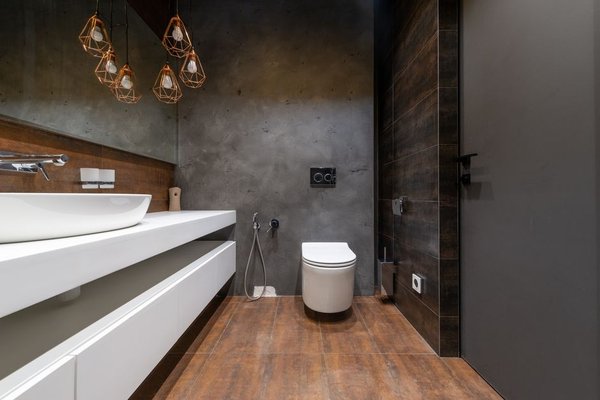

A wall-hung toilet gives a bathroom an uncluttered, contemporary finish: the pan appears to float above the floor, while the cistern stays out of sight. But that clean look comes with decisions behind the wall. Before choosing one for a UK bathroom, compare the everyday benefits with the work required to install and maintain it.
In brief, wall-hung toilets make floor cleaning easier and offer flexibility over pan height. They are not automatically smaller, cheaper or more practical than floor-standing models. The best choice depends on the room, existing plumbing and renovation budget.
What makes a wall-hung toilet different?
Unlike a close-coupled toilet, which stands on the floor beneath a visible cistern, a wall mounted toilet attaches to an engineered support system concealed behind a finished wall. A wall hung toilet frame carries the pan and accommodates a concealed cistern. It must be secured to suitable building structure following the manufacturer’s instructions.
Only the pan and flush plate remain visible. On many systems, the flush plate also covers an opening for servicing cistern parts. That does not mean every hidden pipe or fitting can be repaired from the front.
Advantages of a wall-hung toilet
Cleaning the floor is easier
With no pedestal meeting the floor, a mop reaches underneath the entire pan. You also avoid the cramped junctions around some conventional toilet bases where dust and grime accumulate. For a busy household, this is arguably more valuable than the fashionable appearance.
The bathroom looks less crowded
Visible flooring beneath the pan can make a compact space feel more open. This suits bathrooms with simple tiling or a floating vanity. Yet a sense of space is not the same as extra usable centimetres: the support frame and concealed cistern still require room behind the finished surface.
You can plan the seating height
Many frames permit height adjustment during installation, within manufacturer limits. This lets you consider household comfort before the walls are finished. Once installed and tiled, changing the height is rarely straightforward.
Fittings look more discreet
There is no exposed cistern to dominate the room. A boxed-out section can sometimes double as a shelf, creating a useful place for bathroom essentials without cluttering the floor.
Disadvantages to consider
Installation needs more building work
Replacing a conventional toilet may involve relatively little disruption if the existing connections are suitable. A wall-hung system may require a frame, boxing or a suitable stud-wall assembly, plumbing changes, accurate mounting and new wall finishes.
Older UK homes can be particularly awkward where floors are uneven or the soil pipe sits in the wrong position. The frame must transfer the load through appropriate fixings; ordinary plasterboard alone is not a substitute for structural support.
The total cost can be higher
Comparing ceramic pans alone gives a misleading price difference. Obtain a quotation covering the frame, cistern, flush plate, compatible fixings, waste connections, finishing materials and labour. Re-tiling and making good may add considerably to a retrofit.
Some repairs are more disruptive
Manufacturers such as Geberit provide access to routine cistern components through compatible flush-plate openings. However, a leak in inaccessible pipework or a faulty hidden connection may still require opening the wall. Check the service opening, spare-parts availability and warranty before buying.
Components must match
Not every pan, frame and flush plate is interchangeable. Check the manufacturer’s compatibility information, especially if purchasing the parts separately. A mismatched combination can delay toilet installation or create maintenance problems later.
Will it actually save space?
Imagine a narrow downstairs cloakroom with a conventional WC against the back wall. A wall-hung replacement creates a more open-looking floor, but adding a false wall brings the finished wall face forward. If the new assembly projects farther into the room, legroom may shrink rather than improve.
Before ordering, ask your installer to mark the proposed finished wall line and the front edge of the chosen pan with masking tape. Measure the remaining clearance from those marks, not from unfinished studs or brickwork. This simple check is more reliable than judging dimensions from a showroom photograph.
Where an existing recess can house a compatible frame, the result may be more space-efficient. Compare small bathroom layout ideas and compact bathroom storage solutions before committing to the position.
What should UK homeowners check before buying?
Structure and plumbing
Have an experienced installer assess the floor, wall construction, waste outlet and water supply. Ask which support frame suits those conditions and whether moving the soil pipe will be necessary. Do not assume a frame approved for one construction method suits every stud wall.
Flush function and servicing
Dual-flush concealed cisterns are common, but water volumes and adjustment settings differ between products. Choose a combination appropriate for UK water regulations and compatible with the selected pan. Make sure the service opening remains accessible after tiling.
Fit and comfort
Check the actual seating height, pan projection and clearance beneath it. Try a display model if possible. Rimless pans can assist bowl cleaning, but rimless construction is a separate feature rather than an automatic advantage of wall mounting. A guide to choosing bathroom fixtures may help compare these details.
Wall-hung or conventional: which suits your project?
A wall-hung toilet makes sense when you are already renovating, can accommodate the frame properly and value easier floor cleaning. It can be particularly effective in a carefully planned contemporary bathroom.
A close-coupled model often suits a straightforward replacement or tighter budget. A back-to-wall floor-standing toilet offers another compromise: it conceals much of the plumbing without requiring the pan to hang above the floor.
Frequently asked questions
Are wall-hung toilets strong enough for everyday use?
Yes, when the correct frame is installed and anchored in accordance with its instructions. The engineered support system carries the load. Check the product’s stated rating rather than assuming all models have identical limits.
Can a concealed cistern be repaired without removing tiles?
Routine access to many cistern components is possible through the flush-plate opening. Repairs involving inaccessible pipework may still require removing part of the finish.
Can a wall-hung toilet be installed on a stud wall?
Often, provided the selected frame is approved for that installation and anchored to suitable structure. An installer must assess the actual wall and floor before work begins.
Are wall-hung toilets better than close-coupled toilets?
They are generally easier to clean underneath and deliver a floating appearance. Close-coupled toilets are often simpler to replace and service. Neither design is universally better.
Final verdict
When weighing wall hung toilet pros and cons, pay as much attention to the hidden construction as the visible ceramic. With suitable space, a correctly installed frame and a realistic budget, a wall-hung toilet can be an excellent choice. Where installation is awkward or every centimetre counts, measure carefully and compare a good floor-standing alternative before deciding.