
The best toy storage ideas do more than hide the mess. They make it obvious where things belong, easy for children to find their favourites and realistic for the whole family to tidy up on an ordinary Tuesday evening. A beautifully arranged playroom is little help if every toy has to be sorted into tiny compartments before bedtime.
Instead of starting with matching baskets, start with how your children actually play. Notice which toys move between rooms, which sets need to stay together and where the piles form. Then build a simple system around those habits rather than expecting everyone to learn a complicated new routine.
Give every toy a home that makes sense
Successful toy organisation begins with a few recognisable categories. Building blocks, toy vehicles, dolls, creative supplies and puzzles are usually more useful labels than vague groups such as “miscellaneous”. Children should be able to work out where an item goes without asking an adult.
Keep categories broad enough to make tidying quick. One open bin for toy cars is often more manageable than separate boxes for racing cars, trucks and emergency vehicles. If a collection becomes too large for its container, split it only when there is a clear reason.
Choose containers children can actually use
Low, open bins for everyday favourites
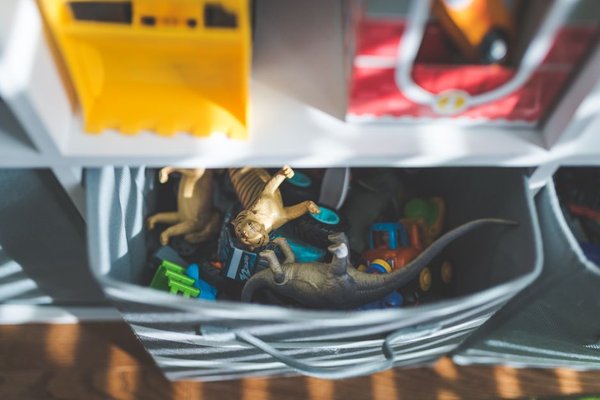
Open baskets and shallow bins are especially useful for kids toy storage because children can see what’s inside and drop toys back without dealing with lids. Place the most-used containers on low shelves or within a child’s comfortable reach. A lightweight bin is easier to carry from a shelf to the play area.
Choose washable, sturdy containers with smooth edges. Avoid heavy boxes that children might try to lift overhead, and secure freestanding shelving or drawer units to the wall according to the manufacturer’s instructions. Good storage should never depend on a child climbing furniture.
Clear boxes for sets with lots of pieces
Transparent boxes work well for construction sets, train tracks and craft materials because the contents remain visible. Choose larger containers for bulky pieces and smaller ones for collections that should stay separate. For very young children, keep small parts that pose a choking risk out of reach.
Organise by where play actually happens
Not every home has a dedicated playroom, and toys rarely stay confined to one room anyway. If puzzles are normally used at the dining table, store them nearby. If younger children play in the living room while adults cook or work, a discreet basket there may be more practical than carrying everything back to a bedroom.
For example, imagine a family with two children who play with blocks beside the sofa after school. A single low basket in the living room gives those blocks a clear destination. At bedtime, the children can collect pieces from the rug and return them in one trip. Moving the basket to a distant playroom might look tidier on paper but creates more work every night.
In a small home, combine a few closed cabinets for adult-managed supplies with accessible bins for children’s everyday toys. This balance helps family storage systems fit into shared spaces without putting everything on display.
Use labels that match your child’s age
Labels reduce the guesswork, particularly when several children share storage. For pre-readers, add a simple picture of blocks, cars or dolls to the front of each container. Older children can use short written labels, either alone or alongside images.
Make tidying part of play, not a major event
The easier the reset, the more likely it is to happen. Put away one activity before starting another when possible, and give children a short, predictable tidy-up cue before meals or bedtime. A five-minute family reset is more sustainable than a weekend-long sorting session.
Give specific, achievable jobs: “Put the blocks in the blue basket” works better than “Clean this whole room.” Younger children may need an adult to help them begin, while older children can take responsibility for a category or shelf.
Consider a small “return basket” for toys found in the wrong room. Empty it during the daily reset rather than interrupting everyone each time a stray toy appears. This approach is particularly helpful in homes with several play areas.
Rotate toys without making the system complicated
When shelves are crowded, toy rotation can create breathing room without getting rid of everything. Keep a manageable selection accessible and store less-used toys somewhere safe and dry. Swap a few items when interest fades, rather than following a rigid schedule.
For families refining playroom organisation, a quick monthly check is often enough to spot overflowing bins, outgrown toys and storage that no longer matches current interests.
Make the storage work with the room
Use vertical space carefully: wall-mounted shelves can hold adult-accessed games or display special creations, while children’s daily toys stay lower down. A bench with accessible compartments or baskets under a sturdy table can provide storage without occupying much extra floor area.
In bedrooms, leave a clear route between the bed, door and play space. If floors become crowded, explore small-space storage solutions before adding more furniture. The same principle applies to organising family living rooms: leave the most frequently used area easy to clear and walk through.
Choose solutions that you can adapt as children grow. A bin that holds soft toys today might hold sports equipment later. Flexible containers are often a better long-term purchase than furniture designed around one specific toy collection.
Frequently asked questions
What is the easiest way to organise lots of toys?
Start by removing broken, outgrown or unused items, then group what remains into a few broad categories. Use accessible containers and label them clearly. The simplest system is one your children can use without constant instructions.
Are open baskets or boxes with lids better for toys?
Open baskets are generally easier for everyday cleanup, especially for younger children. Boxes with lids can be useful for sets that are used less often or need to stay together. Both work best when they are easy to handle and stored safely.
How can I store toys in a living room without a playroom?
Give daily favourites one low basket or a dedicated cabinet compartment near the place children play. Keep occasional toys elsewhere, and make a quick evening reset part of the routine. You do not need a separate playroom to make storage manageable.
How do I encourage children to put their toys away?
Make destinations obvious, keep storage within reach and ask for one specific task at a time. Model the routine alongside younger children, acknowledge their effort and avoid expecting perfect sorting. Consistency matters more than speed.
A simpler system is easier to keep
Effective toy storage ideas are built around real family routines, not picture-perfect shelves. When children can see their toys, reach their containers and understand a few simple categories, tidying becomes a shared habit rather than a daily battle. Start with the spot where toys most often pile up, solve that one problem and adjust the system as your family changes.