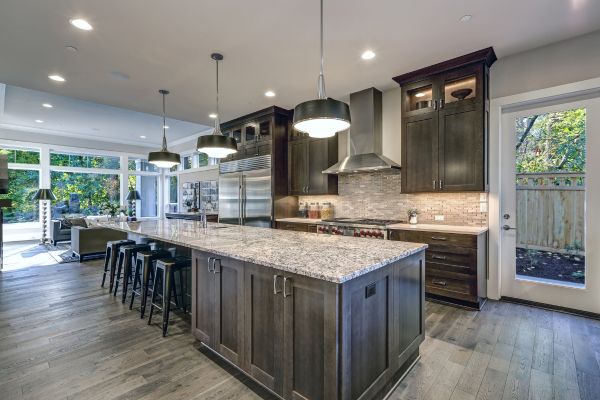

The kitchen island has quietly become one of the most important features in modern homes. It is no longer just an extra countertop placed in the center of a room. In many kitchens, the island acts as a gathering place, prep station, dining area, storage solution, and social hub all at once. People drink coffee there in the morning, answer emails during the afternoon, and linger around it during late-night conversations long after dinner has ended.
What makes kitchen island design inspirations so interesting today is how adaptable they have become. There is no longer a single “correct” version of a kitchen island. Some are large and dramatic with waterfall stone edges and built-in seating, while others are compact wooden structures tucked into smaller apartments. Certain designs lean modern and minimalist, while others feel warm, rustic, or deeply traditional.
The shift reflects a broader change in how people use their homes. Kitchens are expected to support daily life in a more flexible way than ever before. Because of that, kitchen islands are evolving from purely functional additions into highly personal design elements that shape the atmosphere of the entire room.
The Kitchen Island Has Become the Heart of the Home
There was a time when kitchens were designed mainly for cooking efficiency. The work triangle between the sink, stove, and refrigerator guided most layouts, and islands were often considered optional luxuries rather than central features.
That thinking has changed significantly.
Open-concept living transformed kitchens into social spaces connected directly to dining rooms and living areas. As walls disappeared, islands naturally became anchors within larger shared environments. They helped define spaces without separating them completely.
Today, many households treat the kitchen island almost like a communal table. It is where children finish homework, guests gather during parties, and families share quick weekday meals. In some homes, it functions more actively than the formal dining table itself.
Because the island plays so many roles, design choices now focus not only on appearance but also on comfort, movement, and everyday practicality.
Oversized Islands Continue to Dominate Larger Kitchens
One of the strongest kitchen island design inspirations in recent years involves scale. Larger islands remain highly popular, especially in open-concept homes where the kitchen blends into broader living spaces.
These oversized islands often include generous seating areas, integrated sinks, hidden storage, and extended prep surfaces. Some even contain secondary dishwashers, beverage refrigerators, or microwave drawers tucked discreetly into cabinetry.
Despite their size, the most successful large islands rarely feel overwhelming. Designers increasingly soften their appearance through natural materials, curved edges, warm lighting, and furniture-inspired details.
There is also a growing preference for thicker countertop slabs that create a more grounded and architectural feel. Natural stone surfaces with dramatic veining add visual depth without requiring excessive decoration.
Large islands work particularly well because they support how people actually move through kitchens today. They allow cooking, conversation, dining, and casual gathering to happen simultaneously without feeling crowded.
Smaller Kitchens Are Embracing Compact Island Solutions
Not every kitchen has room for a massive centerpiece, of course. Interestingly, smaller kitchens are becoming more creative rather than abandoning islands altogether.
Compact islands with narrow profiles, movable bases, or open shelving designs are increasingly common in apartments and modest homes. Some resemble oversized furniture pieces rather than built-in cabinetry, helping smaller spaces feel lighter and more flexible.
Portable islands on wheels are also making a quiet comeback. Unlike older utilitarian versions, newer designs often include attractive wood finishes, stone tops, or custom storage features that allow them to blend naturally into modern interiors.
In tighter spaces, functionality becomes especially important. Even a small island can dramatically improve workflow by adding prep space and storage without disrupting movement through the kitchen.
What matters most is proportion. A thoughtfully scaled island tends to feel more elegant than one that overwhelms the room simply because it follows current trends.
Waterfall Countertops Still Feel Modern
Waterfall countertops remain one of the most recognizable contemporary island styles, and they continue evolving in interesting ways.
Instead of stopping at the cabinet edge, the countertop material extends vertically down the sides of the island, creating a clean, sculptural appearance. Marble, quartzite, soapstone, and textured quartz surfaces are particularly popular for this style.
What keeps waterfall islands appealing is their simplicity. They create visual continuity while allowing natural materials to take center stage.
Recently, designers have started pairing dramatic stone surfaces with softer surrounding elements. Warm wood cabinetry, matte finishes, and organic lighting help balance the sleekness of the stone, preventing kitchens from feeling too cold or rigid.
The overall effect feels polished without becoming overly formal.
Wood Islands Are Bringing Warmth Back Into Kitchens
For years, many kitchens leaned heavily toward painted cabinetry and monochromatic palettes. Now, wood islands are helping reintroduce warmth and texture into kitchen design.
Natural oak, walnut, white oak, and reclaimed wood finishes are appearing frequently in both modern and farmhouse-inspired interiors. Some kitchens feature contrasting island colors entirely, pairing wood islands with painted perimeter cabinetry for a layered and collected feel.
Wood adds emotional warmth in a way few other materials can. Even highly modern kitchens feel softer and more approachable when natural grain patterns are visible.
There is also growing appreciation for imperfections in wood finishes. Slight variation, knots, texture, and aging contribute to a more relaxed atmosphere that feels lived in rather than overly staged.
Interestingly, this trend reflects a larger movement toward interiors that prioritize comfort and authenticity over perfection.
Seating Design Is Becoming More Intentional
Kitchen island seating used to be treated almost as an afterthought. A few stools were placed along one side, and that was generally enough.
Today, seating arrangements receive far more consideration.
People increasingly want islands that encourage conversation and lingering rather than simply providing quick breakfast spots. Curved seating layouts, wider overhangs, upholstered stools, and integrated banquette-style designs are becoming more common.
Comfort matters more than it once did.
There is also growing attention to spacing and flow. Crowded seating arrangements can make kitchens feel awkward and difficult to navigate, while thoughtfully spaced seating creates a more relaxed environment.
Some designers are even experimenting with asymmetrical layouts where seating wraps partially around corners or extends beyond traditional island boundaries.
The goal is to make kitchens feel socially inviting rather than purely task-oriented.
Mixed Materials Are Creating More Character
One noticeable shift in kitchen island design inspirations involves combining multiple materials rather than relying on uniform finishes throughout the space.
Stone paired with wood, matte metal combined with textured plaster, or painted cabinetry contrasted with natural shelving creates visual depth without overwhelming the room.
For example, an island might feature a stone countertop with ribbed wood paneling underneath or include brass accents integrated subtly into hardware and lighting.
This layered approach prevents kitchens from feeling overly predictable.
The trend also supports more personal design expression. Instead of following rigid matching rules, homeowners are creating spaces that feel collected gradually over time.
That slight sense of imperfection often makes interiors feel more comfortable and believable.
Curved Islands Are Softening Kitchen Layouts
Straight lines dominated kitchen design for many years, but curved islands are beginning to appear more frequently in contemporary interiors.
Rounded corners, oval shapes, and softly curved edges create gentler movement throughout the space. Beyond aesthetics, curves improve flow in busy kitchens by reducing sharp corners and encouraging easier circulation.
There is something psychologically calming about softer shapes. Kitchens filled entirely with hard edges can feel rigid or overly formal, while curved forms create a more relaxed atmosphere.
Curved islands also work particularly well in open-concept homes because they transition more naturally between cooking and living spaces.
While still less common than rectangular islands, the trend is gaining momentum because it introduces subtle visual softness without sacrificing practicality.
Hidden Storage Is Becoming More Sophisticated
Modern kitchen islands are increasingly designed to hide clutter while maximizing efficiency.
Deep drawers for cookware, concealed charging stations, pull-out pantry systems, hidden trash compartments, and appliance garages integrated into islands all help maintain cleaner visual lines.
Some islands now include surprisingly specialized storage features. Baking stations with hidden mixers, vertical tray storage, integrated pet feeding areas, and concealed coffee equipment reflect how personalized kitchens have become.
The emphasis is less about maximizing every inch aggressively and more about creating smoother daily routines.
A well-designed island often feels effortless precisely because so much functionality remains hidden beneath the surface.
Lighting Plays a Bigger Role Than Ever
Island lighting has evolved beyond simple pendant fixtures suspended overhead.
While statement pendants remain popular, designers are increasingly layering lighting carefully to create warmth and dimension. Soft under-counter lighting, integrated shelf illumination, and dimmable overhead fixtures help islands shift atmospheres throughout the day.
Natural materials dominate lighting trends as well. Woven shades, aged brass finishes, ceramic pendants, and textured glass fixtures add character without feeling overly decorative.
Lighting now shapes mood as much as visibility.
In many kitchens, the island becomes visually central partly because lighting draws attention toward it naturally.
The Emotional Appeal of the Kitchen Island
Perhaps the reason kitchen islands continue evolving so dramatically is because they represent more than functionality.
They symbolize togetherness in modern homes.
Even in busy households where schedules rarely align perfectly, people still tend to gather around kitchen islands almost instinctively. Meals begin there, conversations happen there, and ordinary routines unfold around them quietly each day.
Design trends change constantly, but that emotional role remains consistent.
The most successful islands are rarely the most expensive or visually dramatic. They are the ones that support how people genuinely live, cook, talk, and spend time together.
Conclusion
Kitchen island design inspirations continue evolving as kitchens themselves become more central to daily life. From oversized statement islands and compact multifunctional solutions to natural wood finishes, layered materials, and softer curved forms, today’s designs focus on balancing practicality with atmosphere.
What stands out most is the growing emphasis on personalization. Modern islands are no longer one-size-fits-all features designed purely for appearance. They reflect individual routines, social habits, and emotional connections to the home.
As kitchen design trends continue shifting, the island remains remarkably adaptable. It can feel modern, rustic, minimal, traditional, or somewhere in between while still serving the same essential purpose: bringing people together in a space that feels warm, useful, and deeply lived in.