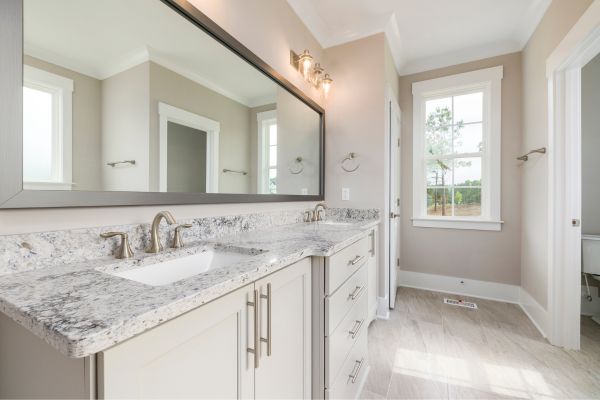

Bathroom countertops do more work than people often realize. They hold the sink, handle daily splashes, collect skincare bottles, survive toothpaste marks, and still need to look good every time someone walks into the room. Unlike a kitchen countertop, which is usually judged by how well it handles food prep, a bathroom counter has a slightly different job. It has to manage moisture, beauty products, heat from styling tools, cleaning products, and the general rhythm of busy mornings.
Choosing between different bathroom countertop materials can feel simple at first, but the details matter. A surface that looks beautiful in a showroom may require more care than expected. Another material may not seem very exciting at first, but it could be the one that makes daily life easier. The best choice depends on the bathroom’s size, your habits, your budget, and the kind of look you want to live with for years.
Why Bathroom Countertop Materials Matter
A bathroom countertop sits right in the middle of function and style. It is one of the first surfaces people notice, but it is also one of the most frequently used. That means appearance alone should never be the only deciding factor.
Bathrooms are humid spaces. Water can sit around the sink, steam can affect surfaces over time, and products like mouthwash, perfume, hair dye, and makeup can stain or dull certain materials. A good countertop should be able to handle this environment without becoming a constant maintenance project.
There is also the question of scale. In a small powder room, the countertop may be more decorative than heavily used. In a family bathroom, it may need to survive children, rushed mornings, and cleaning more often than anyone planned. In a primary bathroom, comfort and atmosphere may matter just as much as durability.
Understanding the pros and cons of each material helps you choose something that fits real life, not just a Pinterest photo.
Quartz Countertops for Easy Everyday Living
Quartz is one of the most popular bathroom countertop materials, and for good reason. It is engineered from natural quartz particles mixed with resin, which gives it a consistent appearance and strong resistance to stains. Unlike some natural stones, quartz does not need regular sealing, which makes it appealing for people who want a polished look without too much upkeep.
The biggest advantage of quartz is its balance. It looks refined, comes in many colors and patterns, and handles moisture well. It can mimic marble, granite, or a clean modern solid color. For bathrooms that get daily use, quartz is often a practical and attractive middle ground.
Still, quartz is not perfect. It can be more expensive than laminate or tile, and although it is durable, it is not completely heat-proof. A very hot curling iron or straightener placed directly on the surface may damage the resin. Using a heat mat is a simple habit, but it is one worth remembering.
Quartz also has a more uniform look than natural stone. Some people love that consistency. Others prefer the unpredictable veining and character found in marble or granite. It comes down to taste.
Granite Countertops for Natural Strength
Granite has a long-standing reputation for durability. It is a natural stone, which means every slab has its own pattern, color movement, and mineral details. In a bathroom, granite can add a grounded, substantial feeling. It works well in traditional spaces, rustic bathrooms, and even modern rooms when paired with simple cabinetry and fixtures.
One of granite’s strongest qualities is toughness. It resists scratches and handles general bathroom wear well. It is also more heat-resistant than many engineered surfaces, which can be useful around styling tools. With proper sealing, granite can resist stains and moisture effectively.
The main downside is maintenance. Granite usually needs periodic sealing to stay protected. If it is not sealed properly, water and oils can seep into the stone and cause staining. Some granite patterns can also feel busy in a smaller bathroom, especially if the vanity, flooring, and wall tile already have strong visual texture.
Granite is a good choice for someone who wants natural stone with strength, but it suits people who are comfortable with a little maintenance now and then.
Marble Countertops for Classic Beauty
Marble has a softness and elegance that few materials can match. Its veining, cool surface, and timeless appearance make it a favorite for bathrooms that aim for a calm, refined feeling. Even a small marble countertop can make a vanity feel more graceful.
The appeal is obvious. Marble looks natural, luxurious, and slightly imperfect in a beautiful way. It reflects light softly and works well with many styles, from vintage-inspired bathrooms to clean contemporary spaces.
But marble asks for care. It is porous, which means it can absorb liquids if not sealed properly. It is also more prone to etching, especially from acidic products. In a bathroom, that may include certain cleaners, cosmetics, or toiletries. Over time, marble can develop marks and a worn-in patina.
For some homeowners, that aging process adds character. For others, it becomes frustrating. Marble is best for people who understand that it will not always look untouched. It is beautiful, but it is not the most forgiving option for a bathroom that sees heavy use.
Solid Surface Countertops for Smooth Simplicity
Solid surface countertops are made from synthetic materials, often acrylic or polyester blends. They are smooth, nonporous, and available in many colors and subtle patterns. One of their biggest advantages is that they can create a seamless look, sometimes with integrated sinks.
This makes solid surface materials especially appealing in bathrooms where easy cleaning matters. There are fewer cracks or grout lines where dirt can collect. Minor scratches can often be buffed out, depending on the material and finish. The surface feels warm and soft compared to stone, which some people find more comfortable.
The drawback is that solid surface counters can be damaged by heat and sharp objects. They do not have the same natural depth as stone, and some designs can look a little plain if the rest of the bathroom lacks texture or contrast.
Still, for a practical, low-maintenance bathroom, solid surface countertops make a lot of sense. They are especially useful in family bathrooms, guest bathrooms, and modern spaces where a clean, simple look is preferred.
Laminate Countertops for Budget-Friendly Updates
Laminate has come a long way from the old, thin-looking surfaces many people remember. Today’s laminate bathroom countertops are available in designs that imitate stone, wood, concrete, and other finishes surprisingly well. For budget-conscious renovations, laminate remains one of the most accessible options.
Its main advantage is price. Laminate is usually much more affordable than quartz, granite, or marble. It is also lightweight, easy to install, and available in a wide range of styles. For a rental property, a quick bathroom refresh, or a powder room that does not see heavy wear, it can be a smart choice.
However, laminate has limits. It can be damaged by water if moisture gets into seams or edges. It is also vulnerable to burns, scratches, and peeling over time. Once the surface is badly damaged, repairs are not always easy or attractive.
Laminate works best when expectations are realistic. It can look good and perform well with careful use, but it does not offer the same lifespan or depth as higher-end materials.
Tile Countertops for Character and Flexibility
Tile countertops can bring a lot of personality to a bathroom. Ceramic, porcelain, and stone tiles come in endless colors, shapes, and textures, making tile one of the most flexible bathroom countertop materials from a design point of view.
Tile is especially useful when you want a custom look. It can suit Mediterranean, farmhouse, vintage, artistic, or colorful bathroom styles. Porcelain tile is also durable and highly resistant to moisture, which makes it practical in wet environments.
The biggest issue with tile is grout. Grout lines can collect dirt, soap residue, and stains if they are not cleaned and sealed properly. A tiled countertop may also have an uneven surface, which can make it less convenient for placing small bottles, makeup, or grooming tools.
Large-format tiles can reduce the number of grout lines and create a cleaner appearance, but tile still has a different feel from a smooth slab countertop. It is a good option for people who value character and customization, as long as they are willing to maintain the grout.
Concrete Countertops for a Modern Custom Look
Concrete bathroom countertops have a strong, modern personality. They can be poured into custom shapes, tinted in different colors, and finished in ways that feel industrial, minimalist, or earthy. For bathrooms with a contemporary or organic style, concrete can look very distinctive.
The appeal of concrete is its custom nature. It can be made to fit unusual vanity sizes, include integrated sinks, or create thick, sculptural edges. It feels solid and architectural, which can give a bathroom a strong design identity.
But concrete is not maintenance-free. It is porous and must be sealed properly. Without good sealing, it can stain, absorb moisture, or develop marks from bathroom products. It may also develop small hairline cracks over time. Some people see this as part of its natural character, while others may find it disappointing.
Concrete can also be heavy, so the vanity and floor structure need to be considered. It is best for someone who likes a custom, slightly imperfect material and does not mind caring for it properly.
Wood Countertops for Warmth and Texture
Wood may not be the first material that comes to mind for a bathroom countertop, but it can be beautiful when used thoughtfully. It adds warmth in a room that often has hard, cool surfaces like tile, porcelain, glass, and metal.
A wood countertop can soften a modern bathroom, make a rustic space feel more natural, or bring depth to a simple white vanity. But because bathrooms are wet spaces, wood needs serious protection. It must be sealed very well, and water should not be allowed to sit on the surface.
The main risk is moisture damage. Wood can warp, stain, swell, or develop mildew if neglected. Around sinks, this becomes especially important. Regular maintenance is part of the deal.
Wood works best in powder rooms or bathrooms where splashing is limited. It can also work well when paired with vessel sinks that reduce cut edges around the basin. For people who love natural warmth and are willing to care for it, wood can be a charming choice.
Porcelain Slab Countertops for a Clean Modern Finish
Porcelain slabs are becoming more common in bathrooms because they offer a sleek look with strong resistance to moisture, stains, and heat. Unlike tile, porcelain slabs can create a smooth surface with fewer seams, giving the bathroom a clean and contemporary appearance.
Porcelain can mimic marble, concrete, stone, or solid colors. It is nonporous, easy to clean, and generally resistant to many everyday bathroom products. For someone who wants the look of natural stone without the same level of maintenance, porcelain can be appealing.
The downside is that porcelain slabs can be expensive to fabricate and install. The edges may also require careful detailing, and not every installer is equally experienced with the material. Chipping can happen along edges if the countertop is not handled or finished properly.
When installed well, porcelain is a strong performer. It suits bathrooms where durability and a refined surface are both priorities.
How to Choose the Right Countertop for Your Bathroom
Choosing the right material starts with the way the bathroom is used. A guest powder room can handle a more delicate or decorative surface because it is not exposed to constant water, cosmetics, or daily clutter. A children’s bathroom or busy shared bathroom needs something more forgiving.
Maintenance is another honest question. Some people enjoy caring for natural materials and do not mind sealing stone or wiping wood carefully. Others want a surface that can be cleaned quickly without special rules. Neither approach is wrong, but choosing against your daily habits usually leads to frustration.
Budget also matters, but it should include installation and long-term care, not just the material price. A cheaper countertop may be perfect for a short-term update, while a more expensive one may make sense in a bathroom you plan to use for many years.
Style should come last, but not because it is unimportant. A countertop covers enough visual space to influence the whole room. The best surface should feel connected to the vanity, floor, wall color, fixtures, and lighting. When all these parts work together, the bathroom feels more settled.
Conclusion
Bathroom countertop materials each bring their own balance of beauty, durability, maintenance, and cost. Quartz offers everyday ease, granite brings natural strength, marble delivers classic elegance, and solid surface options keep things simple and practical. Laminate can be a smart budget choice, tile adds character, concrete feels custom and modern, wood brings warmth, and porcelain slabs offer a clean, resilient finish.
There is no single best material for every bathroom. The right choice depends on how the space is used and how much care you are willing to give it. A countertop should look good, of course, but it should also support the small routines that happen around it every day. When you choose with both style and real life in mind, the bathroom feels not only more beautiful, but easier to live with.