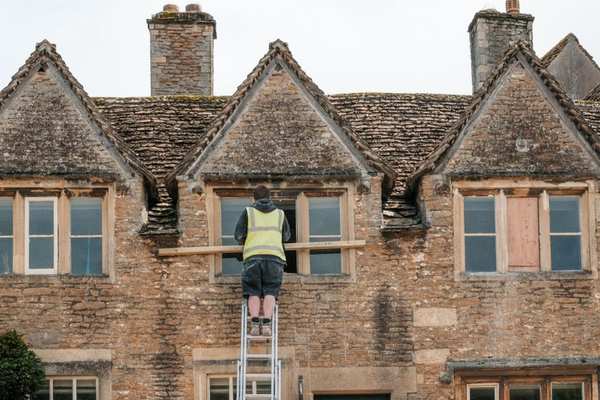

Old houses reveal their history through uneven floors, patched brickwork and windows that have survived generations. Those details are not necessarily defects. The challenge is recognising what has always been there and what has recently changed. This old house maintenance checklist for UK properties focuses on the inspections that prevent damage without turning every quirk into a renovation project.
Start With a Record of the House
Collect any previous survey, roof invoices, damp reports and photographs. Note when repairs were completed and which materials were used. A Victorian terrace with solid brick walls needs a different approach from a 1930s cavity-wall house or a stone cottage with lime mortar.
Take photographs from consistent positions twice a year. Mark each finding as stable, changing or urgent. This turns a property condition checklist into a record that helps you spot patterns.
Check the Roof, Chimneys and Rainwater Goods
Look Up Before Looking Inside
From the ground, use binoculars to look for slipped slates, missing tiles, damaged ridge tiles and gaps around chimney flashings. Check pots and pointing for visible deterioration. Do not climb onto an old roof; fragile coverings and concealed weaknesses make professional access essential.
Inside the loft, look for unexpected daylight, fresh water marks, damp insulation and staining around the chimney. A dry old stain may be historic, but a patch that grows after rain deserves investigation.
Follow the Rainwater
Blocked gutters are a frequent cause of damage in period property upkeep. Watch the house during rainfall from a safe position. Water overflowing beside an upstairs window can soak the wall below even when the roof itself is sound.
Check for sagging gutters, leaking joints, blocked hopper heads and downpipes discharging against foundations. Arrange safe clearing after autumn leaf fall and major storms. Confirm that gullies and drains are flowing freely. Leave high or awkward access to professionals.
Inspect Walls, Mortar and Ground Levels
Walk the perimeter. Look for open mortar joints, flaking bricks, crumbling stone, failed render and patches that stay wet after surrounding masonry dries. Traditional solid walls often absorb and release moisture; hard cement repairs or impermeable coatings can interfere with drying. Consult someone experienced with older buildings before repointing or sealing them.
Notice where patios, flowerbeds or soil have been raised against walls. Check that air bricks remain clear and paving directs rainwater away from the house. Dense plants can conceal damage and keep masonry wet.
Know Which Cracks Need Attention
Some houses have longstanding hairline cracks from settlement or seasonal movement. Photograph and date them rather than filling them immediately. New or widening cracks, bulging walls, suddenly sticking doors or obvious movement warrant assessment by a qualified structural surveyor. Crack width alone cannot establish the cause.
Examine Windows, Doors and Timber
Open and close each sash or casement. Check for soft timber at bottom rails, flaking paint, failed putty, corroded fittings and water collecting on sills. Look at external doors, thresholds and porch roofs for rain entry.
Original windows are often repairable. Localised joinery repairs and appropriate draught-proofing may preserve more character than replacement. Record broken cords, rattles and stuck sashes for a joiner familiar with period buildings.
Trace Damp to Its Source
A dark patch does not automatically mean rising damp. Its position and timing provide clues. Staining beneath a gutter may follow a leak; mould behind a wardrobe on a cold wall may involve condensation; moisture around a chimney can have several causes.
For example, if an upstairs corner of a Victorian terrace becomes damp only after wind-driven rain, photograph the patch, inspect the exterior gutter from the ground and record the weather. That evidence helps a specialist more than ordering chemical damp treatment after a single meter reading.
Check beneath sinks and around baths for plumbing leaks. Avoid covering damp walls with waterproof coatings before diagnosing the cause. A separate damp and condensation guide may help you compare common symptoms.
Keep Air Moving Through Hidden Spaces
Older home maintenance includes places you rarely see. Keep suspended timber-floor vents unobstructed, ensure loft insulation does not block intended ventilation paths and test bathroom and kitchen extractors. Check for musty smells, condensation and visible mould.
Ventilation should be deliberate, not simply uncontrolled draughts. When adding seals or insulation, consider how moisture can escape, and seek advice appropriate to traditional building materials before extensive changes.
Review Floors and Household Services
Look for newly springy floorboards, localised sagging, wood dust, rot near skirting boards and discolouration around visible joist ends. A few squeaks may be longstanding; rapid change or decay near damp masonry merits professional attention.
Test smoke and carbon monoxide alarms according to their instructions and applicable local requirements. Use a Gas Safe registered engineer for gas work and qualified electricians for electrical concerns. Older wiring, plumbing joints and stop taps merit review where alterations are undocumented.
Do not disturb suspected asbestos-containing materials or old painted surfaces through sanding or drilling without appropriate assessment. A home safety checklist can keep recurring tests organised.
Build a Seasonal Inspection Routine
In spring, review winter storm damage, masonry and damp patches. In summer, inspect external paintwork and timber and arrange repairs. In autumn, prioritise gutters, drains, roof defects and overhanging growth. In winter, watch for condensation, plumbing leaks and how walls respond to heavy rain.
After severe storms, make an extra visual check. Keep photographs, dates, contractor details and follow-up actions together. A dedicated gutter cleaning schedule is particularly useful beneath mature trees. Consistent ageing house checks matter more than an exhausting annual overhaul.
Know When to Call a Specialist
Seek prompt help for active water entry, unsafe masonry, suspected structural movement, electrical hazards or serious timber decay. A surveyor experienced with traditional properties can separate cosmetic wear from developing faults. Choose conservation-aware tradespeople where historic fabric is involved.
If a property is listed or subject to local heritage controls, check permissions before alterations. Even straightforward replacements may require consent, and requirements differ across the UK. Routine upkeep should not automatically mean removing original materials.
Frequently Asked Questions
How often should I inspect an old house in the UK?
Carry out a thorough visual check at least twice a year, plus shorter checks after storms and during heavy rain. Gutters may need more frequent attention near trees.
Are cracks normal in period properties?
Some longstanding cracks reflect historic movement. New or progressive cracks should be documented and assessed by a structural surveyor when movement is suspected.
Should I use damp-proofing treatment on an older wall?
Not before establishing the cause and understanding its construction. Leaking gutters, raised ground levels and poor ventilation can create similar symptoms. Inappropriate treatments may worsen moisture problems.
Do listed houses need permission for maintenance?
Minor like-for-like maintenance often needs no consent, but changes affecting historic character may. Ask the relevant local authority or heritage body before beginning uncertain work.
Keep the Checklist Practical
The most useful inspections establish patterns: where rain travels, which materials need to dry and what has changed since the previous visit. A dated photograph, a cleared drain and timely specialist advice often protect an old home better than an unnecessary upgrade.