
A small bathroom can feel crowded long before it is full. A toothbrush sits beside a bottle of cleaner, spare towels occupy the only cupboard, and everyday toiletries disappear behind half-used products. Good bathroom storage organisation starts by giving each item a home based on how often you use it and how much moisture it can tolerate.
Think of the room as a busy workspace rather than a miniature storeroom. Items you reach for every morning need easy access; bulky backups and moisture-sensitive supplies often belong somewhere else. Here is how to make limited space work harder without covering every surface with containers.
Start with a quick bathroom reset
Empty one cupboard, drawer or shelf at a time, placing the contents on a clean towel. Throw away empty packaging and dispose of expired products according to their labels or local guidance. Wipe the storage area and let it dry before putting anything back.
Sort the remaining items into four groups: daily essentials, occasional-use products, spare supplies and cleaning equipment. Put duplicates together so you can see whether you really need four open bottles of body lotion. If several people share the bathroom, make a separate small group for each person’s regular items.
Before buying organisers, measure the usable depth, width and height of each storage space. Remember hinges, pipes and clearance for lifting bottles out. These measurements tell you which trays and caddies will actually fit.
Create storage zones around your routine
Keep daily essentials within easy reach
Your everyday zone might contain toothbrushes, toothpaste, face wash, moisturiser and a hairbrush. Choose a drawer, a closed mirrored cabinet or one easy-to-clean tray rather than scattering these across the basin. Leave enough space to wipe underneath everything.
Give occasional items a second-tier home
Hair masks, spare razors and less frequently used grooming tools can sit on a higher shelf or in a labelled basket. Group them by purpose rather than bottle colour. This makes bathroom organisation easier to maintain because putting things away requires little thought.
Move overflow out of the bathroom
Spare toilet rolls and unopened toiletries may fit in a dry hall cupboard or bedroom drawer. Medicines should be stored according to their labels, away from humidity and temperature swings; a steamy bathroom is often unsuitable. Moving reserves elsewhere frees space for products used in the room.
Make bathroom cupboard organisation practical
Under-sink cupboards are awkward because pipes divide the space. Try two removable caddies, one on either side of the plumbing, instead of one oversized box. A shallow tray can catch small drips and make cleaning easier, but it does not replace fixing a leak. Keep pipe joints visible enough to inspect.
Store cleaning products separately from personal-care items, preferably in a secured space inaccessible to children. Leave chemicals in their original labelled containers and never combine different cleaners. If there is no safe bathroom cupboard, keep these supplies in a suitable child-inaccessible location elsewhere.
In deep cupboards, use trays you can pull out rather than piling products in rows. A clear or open-front container helps you spot what is running low. Avoid buying matching bins before checking how many categories genuinely need homes; too many boxes can waste space.
Use vertical space without creating clutter
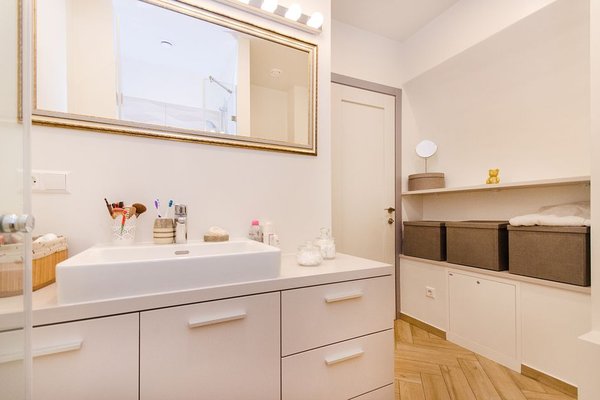
The wall above a toilet, an unused corner or the back of a door may offer useful small bathroom storage. Slim shelves work best for light items, while a narrow cabinet can hide spare rolls and toiletries. Keep shelves out of routes where people might bump into them.
In a rented home, removable hooks can help with lightweight towels or washcloths, provided they suit the surface and humid conditions. Follow the stated weight limit. Heavier racks need secure fixings; check for concealed pipes or wiring before drilling.
Choose moisture-aware toiletries storage
Bathroom humidity changes throughout the day, especially after showers. Open wire or perforated shower caddies allow water to drain, while solid-bottom containers need regular emptying and cleaning. Choose materials designed for wet areas and inspect metal fittings for corrosion.
Keep shower products in one caddy rather than lining bottles along the bath edge. Dry the caddy periodically and remove residue. Damp flannels should hang where air can circulate, not be stuffed into a closed basket. Wash and thoroughly dry textiles regularly to discourage musty smells.
For towels, prioritise dry storage and easy rotation. Hang the towel in use so it can dry fully. Keep clean spares away from direct shower spray, and avoid cramming them into a damp cabinet. If condensation persists, improve ventilation and address the moisture problem rather than sealing items in plastic tubs.
Try a realistic layout for a shared small bathroom
Imagine a compact bathroom used by two adults, with one sink drawer, a narrow cabinet and a shower. Reserve the drawer for shared morning basics plus two personal trays. Put weekly grooming products in the cabinet, with heavier bottles on the lowest shelf. Fit a draining shower caddy and move bulk purchases to a dry cupboard outside the room.
Keep one spare toilet roll within reach and store the rest elsewhere. Give each person a hook for their towel, spaced so the fabric can dry. This arrangement reduces morning searching without requiring a renovation or lots of new organisers.
Build a five-minute maintenance habit
Once a week, return stray items to their zones, remove empty bottles, wipe wet surfaces and check whether any cupboard feels damp. Before shopping for toiletries, look in the reserve-supplies area to avoid duplicates.
If a basket regularly overflows, don’t immediately buy a bigger one. Ask whether its contents belong together and whether some items belong outside the bathroom. The same principle applies when organising a small linen cupboard: keep each category within a clear limit. For more visual space, explore ways to make a small bathroom feel bigger by reducing countertop clutter.
Frequently asked questions
How do I organise a bathroom with no cupboards?
Start with a slim shelf or suitable over-door organiser, then use one compact container for daily toiletries. Store bulky backups outside the bathroom. Choose fixtures safe for the surface, load and available clearance.
What should I keep on a small bathroom countertop?
Ideally, only products used every day and perhaps a soap dispenser. A washable tray can define their space. Clear the rest so the sink is easier to clean and the room feels less busy.
Are baskets better than drawers for bathroom storage?
Neither is automatically better. Drawers suit small daily items and keep them hidden; removable baskets work well in deep cupboards or on shelves. In wet areas, prioritise drainage and easy cleaning over appearance.
How can I stop bathroom cupboards smelling damp?
Dry wet contents, check for leaks or condensation, clean affected surfaces and improve ventilation. Avoid storing damp towels in closed cupboards. If mould or moisture keeps returning, investigate and address its source.
A bathroom that stays organised
Successful bathroom storage organisation is less about squeezing in more shelves and more about matching each item to the right place. Keep daily necessities close, move excess stock somewhere dry, separate cleaning chemicals and give damp items room to air. Even a compact bathroom can feel calmer, easier to clean and simpler to use.