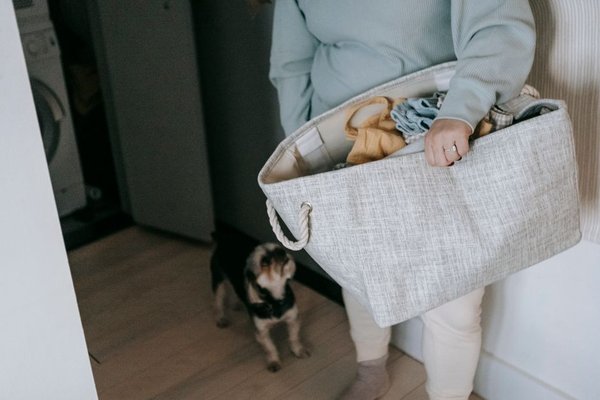

A small home can feel cluttered long before it is actually full. The problem is rarely just a lack of square metres. More often, everyday items do not have clear homes, storage is awkward to access, and useful surfaces become temporary holding zones. Good small home organisation starts by reducing what needs to be stored, then creating simple systems that are easy to maintain.
The goal is to make daily life easier: put things away quickly, find what you need, and reset the main living areas in minutes rather than spending a whole weekend tidying.
Reduce the volume before buying storage
Buying baskets and boxes before decluttering often creates organised-looking clutter. In a compact home, every container also takes up space, so first decide what genuinely deserves room.
Work in small zones instead of emptying an entire room. Tackle one drawer, one shelf, the area under the sink, or part of a wardrobe. Remove duplicates, broken items, things you no longer use, and objects kept only because there is nowhere else to put them.
A useful question is: would I choose to give this item space in my home today? That is often easier than asking whether you might need it someday, and it makes clutter control more practical.
Give everyday items convenient homes
The best organising system is usually the one with the fewest steps. If keys belong in a drawer across the room, they will probably end up on a table near the door. If laundry storage is inconvenient, clothes may collect on a chair.
Notice where items naturally land and create storage nearby. A shallow tray by the entrance can hold keys and sunglasses. A basket beside the sofa can contain throws or toys. A small dish on a bedside table can collect jewellery.
This matters when organising compact spaces because inconvenient storage quickly becomes unused storage. The system should support normal habits rather than depend on perfect behaviour.
Use vertical and overlooked space carefully
Small homes often have more usable space than they first appear to. Look above, below and behind obvious storage zones without filling every visible wall.
Inside wardrobes, an extra shelf can use the empty area above a hanging rail. Under a bed, low containers can hold seasonal bedding or spare towels. The inside of a cupboard door may suit slim storage for lightweight items. High shelves are better for things used only occasionally.
Keep daily items within easy reach where possible. Less-used possessions can go higher or lower. That prevents a space-saving system from becoming frustrating.
A natural related topic for further reading is small-space storage ideas.
Organise by activity, not only by room
A compact home often asks one room to do several jobs. A dining table may also be a desk, homework station and craft surface. In these spaces, organising by activity can work better than organising strictly by room.
Keep each activity’s essentials together so they can be brought out and cleared away as one unit. Work supplies might live in one drawer or portable box. Children’s colouring materials can stay in one container. Chargers can be grouped near the place where devices are usually used.
Protect visible surfaces from becoming storage
Visual clutter makes a small home feel busier because there are fewer open sightlines. Kitchen counters, bedside tables, coffee tables and entry surfaces deserve special attention because they attract items throughout the day.
Instead of keeping every surface completely empty, decide what is allowed to live there. A kitchen counter might permanently hold the kettle and coffee equipment but nothing else. An entry surface might hold one tray for post and keys.
Leave part of each major surface deliberately clear so the room feels calmer and the surface remains usable.
Use storage limits to stop clutter returning
Containers work best when they act as boundaries. If reusable shopping bags have one basket, that basket defines how many you can comfortably keep. If spare toiletries have one shelf, new products should fit there rather than spreading into several cupboards.
When a category no longer fits, use something up, remove a duplicate, or decide whether it deserves more space. The answer should not automatically be another box.
This also works for books, toys, clothes and kitchen equipment, controlling growth before the home becomes difficult to manage.
Build a five-minute daily reset
Organisation lasts when restoring order is easier than ignoring it. A short reset at the same time each day can prevent small messes from becoming large ones.
Imagine a one-bedroom flat where the dining table serves as both workspace and eating area. At day’s end, the laptop goes into a nearby drawer, cables return to one pouch, papers go into a vertical file, and the table is cleared. The transition takes only a few minutes because every item has a nearby destination.
Your reset might include clearing the main table, returning shoes to entrance storage, moving dishes to the kitchen and putting stray items back in their zones. Keep it short enough to repeat even on busy days.
Two other useful internal topics are daily decluttering habits and simple home organisation routines.
Fix systems that repeatedly fail
If the same pile keeps returning, the system is probably asking too much. A basket may be too far away, a cupboard may be too full, or the category may not have a defined limit. Treat repeated clutter as useful information.
Move storage closer, reduce the number of items, or simplify the steps needed to put things away. Sustainable organisation comes from adjusting the system until it fits the people using it.
Frequently asked questions
How do I organise a small home with very little storage?
Start by reducing duplicates and unused belongings, then use vertical space, under-bed storage and the inside of cupboards. Keep everyday items easy to reach and reserve less accessible areas for seasonal or occasional belongings.
What should I organise first in a cluttered small home?
Begin with one high-impact area that affects daily life, such as the entrance, kitchen counter or main table. Finishing a small zone creates immediate relief without making a bigger temporary mess.
How can I keep a small home tidy every day?
Give frequently used items convenient homes, limit what can stay on visible surfaces, and use a short daily reset. If tidying takes too long, simplify the storage system rather than relying on more discipline.
Are storage boxes useful in a small home?
Yes, when they contain a defined category and fit a specific space. They are less useful when they hide unsorted belongings or encourage you to keep more than the available space can comfortably hold.
Keep the systems simple enough to last
Organising a compact home is less about squeezing possessions into every available gap and more about deciding what stays, where it lives and how easily it can be returned. Declutter first, use overlooked space selectively, protect visible surfaces, and let storage limits control how categories grow.
When each system matches real daily habits, keeping the home organised becomes a series of small actions instead of a major recurring project. That is what makes a tidy small home sustainable: not perfect storage, but simple routines you can repeat.